87 resources found

Case studies

Lead in Paint Regulation: Case Study – The Philippines

This case study describes the adoption of regulations on lead paint in Philippines and how this came about through a collaboration between government, civil society and industry.

Emerging Policy Issues: Lead in paint
Case Study 3
Case studies

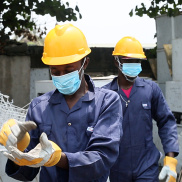
Piloting the Extended Producer Responsibility scheme in Nigeria

This case study highlights three main achievements resulting from the EPR pilot that tested potential collection channels, determined local e-waste treatment costs, and promoted environmentally sound e-waste management and gender equality in Nigeria's electronics sector.

  1. Setting an EPR financial mechanism by understanding local collection and recycling costs and estimating the EPR fee based on local costs.
  2. Reducing the health and environmental risks associated with e-waste management practices by ensuring hazardous materials like mercury and Persistent Organic Pollutants in e-waste are recycled in an environmentally sound manner.
  3. Improving the health, security, and safety of waste management workers, including women who face various risks in the sector.

The study concludes with a summary of the next steps and key learnings that emphasize the importance of environ-mentally and socially responsible e-waste management with a focus on gender equality in the sector.

Healthy Materials Lab
Case studies

PA Hemp Home

This case study describes the ongoing renovation of a home in Pennsylvania using HempLine, a natural insulation product. The home is designed to be fully disability accessible, making healthy building materials particularly important. The renovation will act as a model for the future of healthy, affordable and accessible housing, and prove to other developers that the radical change this industry needs is possible.

Case studies

Case study: "What's it Made of?" with Sustainable Furnishings Council

"What's it Made of?" is an environmental health initiative which encourages the elimination of dangerous substances commonly included in furniture production. The initiative involves a simple pledge for manufacturers to ask their suppliers about the substances in their materials and products. "What's it Made of?" was launched in 2016 and instantly gained over 300 signatures, which continue to grow through the efforts of the Sustainable Furnishings Council.

Emerging Policy Issues: Chemicals in products
Case studies

Case Study: Common Bond Communities Dublin Crossing

Dublin Crossing is a 50-unit, 3-storey affordable housing development in Minnesota. The specifications for the development were benchmarked against the HomeFree hazard spectrums and incorporated measures such as low-VOC paint, and doors and millwork using NAUF (No Added Urea Formaldehyde) composite wood products. The project was used as an opportunity to explore alternative flooring options to reduce toxins whilst meeting practical requirements such as durability and easy maintenance.

Case studies

Case study: Breathaplasta by Adaptavate

Breathaplasta is a lime-based plaster system designed to be thermally insulating and moisture regulating. The product is made from a bio-aggregate which is engineered to reduce the risk of condensation and mould, reduce heat loss and improve thermal comfort. Breathaplasta is produced by Adaptavate, a UK-based company which aims to support healthier and more resource-efficient buildings.

Report

Lead in Solvent-based paints for home use in Africa

This report presents the results of a major research project into the total lead content of solvent-based paints for home use available on the market in 15 African countries: Benin, Cameroon, Côte d’Ivoire, Egypt, Ethiopia, Guinea, Kenya, Morocco, Mozambique, Nigeria, Sudan, Tanzania, Togo, Uganda and Zambia. It also presents background information on the health impacts of lead paint, especially for children; a review of national policy frameworks that are in place on lead paint, and it provides a strong justification for adopting and enforcing further regulatory controls in these countries.

Emerging Policy Issues: Lead in paint
UNEP
Report

Chemicals in Plastics: A Technical Report

Chemicals in Plastics: A Technical Report aims to inform the global community about the often-overlooked chemical-related issues of plastic pollution, particularly their adverse impacts on human health and the environment as well as on resource efficiency and circularity.  Based on compelling scientific evidence, it further highlights the urgent need to act and outlines possible areas for action. It also aims to support the negotiation process to develop the instrument on plastic pollution based on United Nations Environment Assembly resolution 5/14. The report outlines a set of credible and publicly available scientific studies and initiatives focused on chemicals in plastics and the science-policy interface.

The report was developed by UNEP in cooperation with the Secretariat of the Basel Convention on the Control of Transboundary Movements of Hazardous Wastes and Their Disposal, the Rotterdam Convention on the Prior Informed Consent Procedure for Certain Hazardous Chemicals and Pesticides in International Trade, and the Stockholm Convention on Persistent Organic Pollutants, with lead authors from the International Panel on Chemical Pollution, as well as contributions from key experts.

Avatar