104 resources found

Database

Special programme projects database
by |
January 2021
copied to clipboard

The Special Programme has successfully processed three rounds of applications since its inception in 2015. The Programme is currently funding projects from 42 countries. You can explore the projects through our Projects Database.Use the tool below to discover more about projects that have been funded by the Special Programme. It provides an overview of the activities each project has been undertaking to implement the Basel, Rotterdam and Stockholm Conventions, the Minamata Convention and SAICM. It also categorizes the objectives of

Database

Chemical Entities of Biological Interest

by
European Bioinformatics Institute
|
January 2021
copied to clipboard
Chemical Entities of Biological Interest, also known as ChEBI is a chemical database and ontology of molecular entities focused on 'small' chemical compounds, that is part of the Open Biomedical Ontologies (OBO) effort at the European Bioinformatics Institute (EBI).The term "molecular entity" refers to any "constitutionally or isotopically distinct atom, molecule, ion, ion pair, radical, radical ion, complex, conformer, etc., identifiable as a separately distinguishable entity". The molecular entities in question are either products of nature or synthetic products which
Database

Chemical Awareness toolkit

What is CAt and where does all the data come from?The Chemical Awareness toolkit (CAt) is a free web application that provides rapid access to chemical information for product stewards, risk assessors, toxicologists, chemists, microbiologists, engineers, and other researchers. It includes screening tools that provide chemical information including toxicological hazards, environmental fate, persistence & bioaccumulation, occupational exposure limits, government regulations, and public perception.CAt utilizes an integrated database containing information from key lists provided by Verisk 3E, publicly available lists, databases
Emerging Policy Issues: Chemicals in products
Report

Plastics Pose a Threat to Human Health

Plastics Pose a Threat to Human Health: Authoritative Reports Shows Plastics and Microplastics are Pervasive Sources of Exposure to Dangerous Endocrine-disrupting ChemicalsPlastics contain and leach hazardous chemicals, including endocrine-disrupting chemicals (EDCs) that threaten human health. An authoritative new report, Plastics, EDCs, & Health, from the Endocrine Society and the IPEN (International Pollutants Elimination Network), presents a summary of international research on the health impacts of EDCs and describes the alarming health effects of widespread contamination from EDCs in plastics.EDCs are
Emerging Policy Issues: Endocrine-Disrupting Chemicals
Report

Women, Chemicals and the SDGs

by |
December 2020
copied to clipboard
Gender Review Mapping with a Focus on Women and Chemicals: Impact of Emerging Policy Issues and the Relevance for the Sustainable Development GoalsThe aim of this report is to show the impact chemicals have on women as a vulnerable group highly exposed to hazardous chemicals and gender inequalities re­lated to decision-making around the management of chemicals and waste. The report also means to provide concrete steps that can be taken to safeguard the health of women and empower women in
Report

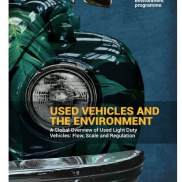
Used Vehicles and the Environment

by |
October 2020
copied to clipboard
Used Vehicles and the Environment - A Global Overview of Used Light Duty Vehicles: Flow, Scale and RegulationMillions of used cars, vans and minibuses exported from Europe, the USA and Japan to low- and middle-income countries are hindering efforts to combat climate change. They are contributing to air pollution and are often involved in road accidents. Many of them are of poor quality and would fail road-worthiness tests in the exporting countries.A landmark, first-of-its-kind United Nations Environment Programme (UNEP) report
Emerging Policy Issues: Chemicals in products
Topics: Circularity
Report

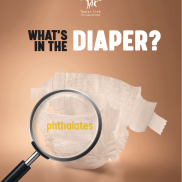
What's in the Diaper

Presence of Phthalates in Baby DiapersThe use of disposable diapers have been the standard for baby hygiene for many years.Among polymers used in diapers Phthalates are generally used as plasticizers and catalysts for the polymerization. Phthalates provide flexibility & durability to these polymers because of which they are used in the manufacturing of diapers.As Phthalates have been characterized as an endocrine disrupting chemical, the use of Phthalates in the diapers raises concern of possible health impacts on children.
Report

An Assessment Report on Issues of Concern: Chemicals and Waste Issues Posing Risks to Human Health and the Environment

by |
September 2020
copied to clipboard
Many countries and regions have set up regulatory and policy frameworks to achieve sound chemicals and waste management. In addition to national and regional efforts, the international community has taken concerted joint actions to address specific issues of concern, including chemicals that can be transported over long distances by wind and water, are transported through global trade in resources, products and waste, or are used or are present in many countries.Substantial progress has been made by the international community, including
Avatar