76 resources found

Report

Chemicals of Concern for the Health Sector

Chemicals are widely used in daily life. They have a unique importance in the health-care sector, where they are used as disinfectants, cleaners, laboratory re­agents, sterilants, pesticides, medicines and pharma­ceuticals and in medical devices and equipment. The hazards of these chemicals are not well understood by health professionals nor incorporated into procure­ment decisions.To minimize these hazards, the health sector has been taking steps to promote and implement sustainable healthcare within their institutions and to collaborate externally with suppliers and manufactures
Report

Single-Use Plastic Products (SUPP) and their alternatives: Recommendations from Life Cycle Assessments

UN Environment Programme (UNEP) defines single use plastic products as “an umbrella term for different types of products that are typically used once before being thrown away or recycled” (UNEP 2018), which includes food packaging, bottles, straws, containers, cups, cutlery and shopping bags. It has been estimated that about 100-150 million tonnes of plastics are produced for single use products and about 8 million tonnes of plastics are dumped into the oceans every year (Plastics Oceans 2019)There is a need
Emerging Policy Issues: Chemicals in products
Topics: Life Cycle
E-learning

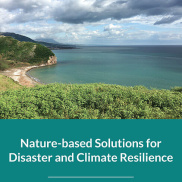
Massive Open Online Course on Nature-based Solutions for Disaster and Climate Resilience

by |
January 2021
copied to clipboard
Who is the course aimed at?Nature offers many solutions to reduce the impacts of disasters and climate change, such as protecting forests on steep slopes, maintaining sand dunes along coastline and wetlands to buffer excess rainwater. In this course, find out how people around the world are building resilience to disasters and climate change impacts through Nature-based Solutions.This course will help you understand how to apply these Nature-based Solutions that restore or protect natural or modified ecosystems and biodiversity and
Report

Plastics Pose a Threat to Human Health

Plastics Pose a Threat to Human Health: Authoritative Reports Shows Plastics and Microplastics are Pervasive Sources of Exposure to Dangerous Endocrine-disrupting ChemicalsPlastics contain and leach hazardous chemicals, including endocrine-disrupting chemicals (EDCs) that threaten human health. An authoritative new report, Plastics, EDCs, & Health, from the Endocrine Society and the IPEN (International Pollutants Elimination Network), presents a summary of international research on the health impacts of EDCs and describes the alarming health effects of widespread contamination from EDCs in plastics.EDCs are
Emerging Policy Issues: Endocrine-Disrupting Chemicals
Report

Women, Chemicals and the SDGs

by |
December 2020
copied to clipboard
Gender Review Mapping with a Focus on Women and Chemicals: Impact of Emerging Policy Issues and the Relevance for the Sustainable Development GoalsThe aim of this report is to show the impact chemicals have on women as a vulnerable group highly exposed to hazardous chemicals and gender inequalities re­lated to decision-making around the management of chemicals and waste. The report also means to provide concrete steps that can be taken to safeguard the health of women and empower women in
E-learning

Massive Open Online Course on Marine Litter

UN Environment Programme and Open Universiteit have created a Massive Open Online Course (MOOC) on Marine Litter as a key activity of the Global Partnership on Marine Litter (you can join the GPML). It is also part of the Clean Seas Campaign. The course starts on October 26, 2020. It is free for all students and available in 10 different languages. You can still enroll until November 15. Register here!Marine litter is a global problem that affects every ocean of
Report

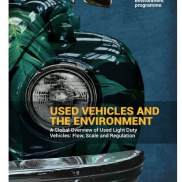
Used Vehicles and the Environment

by |
October 2020
copied to clipboard
Used Vehicles and the Environment - A Global Overview of Used Light Duty Vehicles: Flow, Scale and RegulationMillions of used cars, vans and minibuses exported from Europe, the USA and Japan to low- and middle-income countries are hindering efforts to combat climate change. They are contributing to air pollution and are often involved in road accidents. Many of them are of poor quality and would fail road-worthiness tests in the exporting countries.A landmark, first-of-its-kind United Nations Environment Programme (UNEP) report
Emerging Policy Issues: Chemicals in products
Topics: Circularity
Report

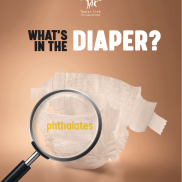
What's in the Diaper

Presence of Phthalates in Baby DiapersThe use of disposable diapers have been the standard for baby hygiene for many years.Among polymers used in diapers Phthalates are generally used as plasticizers and catalysts for the polymerization. Phthalates provide flexibility & durability to these polymers because of which they are used in the manufacturing of diapers.As Phthalates have been characterized as an endocrine disrupting chemical, the use of Phthalates in the diapers raises concern of possible health impacts on children.
Avatar