108 resources found

Policy document

Gender and the sound management of chemicals and waste

by |
September 2018
copied to clipboard
“Gender mainstreaming” is defined as a strategy for making both men and women’s concerns and experiences an integral part of policies and programmes in all political, economic and societal spheres.In practice, gender mainstreaming supports the contribution of men and women to society equally, through policies and programmes that address their specific needs. The Sustainable Development Goals (SDGs) of the 2030 Agenda aim to address inequalities among all population groups, especially women, children, and the impoverished. Directly addressing the links between
Emerging Policy Issues: Chemicals in products
Policy document

Gender and the sound management of chemicals and waste: Prepared for the SAICM intersessional process beyond 2020
A request was made at the first intersessional meeting for information on the relationship between women and chemical safety as it relates to emerging policy issues and issues of concern, covering in particular the period beyond 2020. The Bureau agreed at its May 2017 meeting for the secretariat to prepare a paper, for the second intersessional meeting, that reviews the broader concept of gender and the sound management of chemicals and waste, in line with the 2030 Agenda for Sustainable
Report

Gender and Chemicals: Questions, Issues and Possible Entry Points

The present paper was produced as part of the project: "Gender and Chemicals: Issues, Stakeholders, Strategies", conducted by the MSP Institute in 2017. We reviewed relevant literature and international policy making processes, and conducted 20 expert interviews between May and October 2017.
Report

Study on Knowledge Management and Information Sharing for the Sound Management of Industrial Chemicals

Knowledge and information sharing are critical components of the SAICM goal. Since the inception of SAICM, there have been advances in the availability and quality of chemical safety information. However, information gaps remain and there is a large discrepancy in the understanding of the number of chemicals in commerce amongst the various stakeholders. There is a need to draw upon experiences from various regulatory approaches that exist across the globe to have a better understanding and collective overview. The current
Report

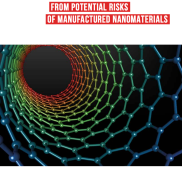
WHO guidelines on protecting workers from potential risks of manufactured nanomaterials

The term nanomaterials refers to materials that have at least one dimension (height, width or length) that is smaller than 100 nanometres (10−7 metre), which is about the size of a virus particle. This particular size dimension represents a major characteristic of manufactured nanomaterials (MNMs). The unique properties of MNMs may result in highly desirable behaviour leading to such varying applications as better paints, better drugs and faster electronics. However, for the same reason, MNMs may also present health hazards
Emerging Policy Issues: Nanotechnology
Report

A journey into the tanning industry

by
Centro Nuovo Modello di Sviluppo
|
November 2016
copied to clipboard
A Tough Story of Leather analyses the situation for workers in the Italian tanning industry.This report has been produced by Centro Nuovo Modello di Sviluppo (CNMS) and the Campagna Abiti Puliti in 2016. This research, which forms part of the Change your Shoes project, focuses on the so called Leather Republic: the Santa Croce District. This report has been produced by Centro Nuovo Modello di Sviluppo (CNMS) and the Campagna Abiti Puliti in 2016. A Tough Story of Leather analyses
Policy document

SAICM texts and resolutions of the International Conference on Chemicals Management

September 2015
copied to clipboard
The new version of SAICM texts exists in English only and includes the resolutions adopted by ICCM at its first, second and third sessions. The older other language versions include only resolutions adopted by ICCM at its first session.New activities included in the Global Plan of ActionAt ICCM3 (17-21 September 2012), SAICM stakeholders agreed to the inclusion of new activities relating to the environmentally sound management of nanotechnologies and manufactured nanomaterials and hazardous substances within the life-cycle of electrical and
Policy document

Overall Orientation and Guidance for achieving the 2020 goal of sound management of chemicals

The future we want for the sound management of chemicals1.In paragraph 23 of the Johannesburg Plan of Implementation, adopted at the World Summit on Sustainable Development in 2002, Governments identified the goal of “achiev[ing] by 2020, that chemicals are used and produced in ways that lead to the minimization of significant adverse effects on human health and the environment” (see appendixA).That goal was further adopted as part of the Strategic Approach to International Chemicals Management by the International Conference on
Avatar