108 resources found

Report

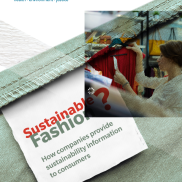
Sustainable Fashion? How companies provide sustainability information to consumers

by
HEJSupport International
|
March 2020
copied to clipboard
The new report “Sustainable Fashion? How companies provide sustainability information to consumers” by HEJSupport touches upon gaps in the current provision of product sustainability information to consumers, with the aim of suggesting a way forward which makes consumers a driving force able to shape the future of sustainable textiles.The report provides recommendations for business, policy makers and consumers.The sustainability of the fashion industry largely depends on the work of regulators and product manufacturers, including their suppliers. But very often the
Emerging Policy Issues: Chemicals in products
Policy document

Challenges for a Sustainable Chemicals and Materials Policy: The Need for Transformation in the Global Context

by |
December 2019
copied to clipboard
Over the past few years the use of natural resources and the production of chemicals have increased dramatically – and a further increase is forecast. Whereas earlier the main focus was on local effects on health and the environment, in the meantime it has become clear that current ways of dealing with natural resources, chemicals and products manufactured from chemicals are threatening the biosphere as a whole.In 2009 and 2015 scientists introduced the concept of planetary boundaries. As part of
Report

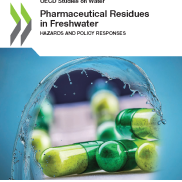
Pharmaceutical Residues in Freshwater: Hazards and Policy Responses

by |
November 2019
copied to clipboard
Pharmaceutical Residues in Freshwater: Hazards and Policy ResponsesThis report calls for a better understanding of the effects of pharmaceutical residues in the environment, greater international collaboration and accountability distribution, and policy actions to prevent and remedy emerging concerns. Laboratory and field tests show traces of oral contraceptives causing the feminisation of fish and amphibians, and residues of psychiatric drugs altering fish behaviour. Antimicrobial resistance, linked to the overuse of antibiotics, has rapidly escalated into a global health crisis. Unless adequate
Policy document

Knowledge Management and Information Sharing for the Sound Management of Industrial Chemicals

«Knowledge and Information» is one of the five Strategic Objectives of SAICM.SAICM’s Overarching Policy Strategy recognizes that knowledge, information and public awareness are the foundations of sound decision-making, on the management of chemicals and products containing chemicals. However, the Policy Strategy also under-lines that there is a lack of clear, timely and appro-priate information easily accessible to local popula-tions about the health and safety effects of chemi-cals.It is for this reason, that knowledge and information sharing are critical components of
Report

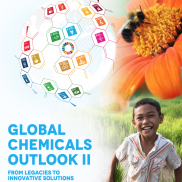
Global Chemicals Outlook II: From Legacies to Innovative Solutions

by |
April 2019
copied to clipboard
The Global Chemicals Outlook II – From Legacies to Innovative Solutions: Implementing the 2030 Agenda for Sustainable Development, mandated by the UN Environment Assembly in 2016, seeks to alert policymakers and other stakeholders to the critical role of the sound management of chemicals and waste in sustainable development. It takes stock of global trends as well as progress made and gaps in achieving the global goal to minimize the adverse impacts from chemicals and waste by 2020.Part I of the
Emerging Policy Issues: Chemicals in products
Report

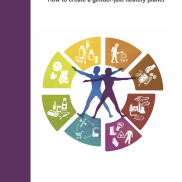
Gender & SAICM Beyond 2020: How to create a gender-just healthy planet

The present publication was produced as part of the project: "Gender and Chemicals - Together for a gender-just healthy planet", conducted by the MSP Institute in 2019.There is a number of gender aspects relevant to chemicals and chemicals and waste management. However, many of them are not receiving the attention they should in order to ensure the best possible decisions in policy-making and effective implementation.The goal of this report is to increase the integration of gender in international chemicals and
Report

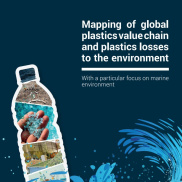
Mapping of Global Plastics Value Chain and Plastics Losses to the Environment: With a Particular Focus on Marine Environment

by |
November 2018
copied to clipboard
Plastics have become one of the most ubiquitous materials used globally, and global production has on average increased by about 9% per year since 1950.The plastic industry has become a major economic actor with revenue of about 1,722 billion Euros in 2015. The issue of plastics ending up in the oceans and harming marine lifeforms has been known since the 1970s. Research focusing on the impacts associated with exposure of organisms to marine micro and macroplastics has been ongoing for
Emerging Policy Issues: Chemicals in products
Policy document

Revised Guidance Document 150 on Standardised Test Guidelines for Evaluating Chemicals for Endocrine Disruption

by |
September 2018
copied to clipboard
The OECD releases the Revised Guidance Document 150 on Standardised Test Guidelines for Evaluating Chemicals for Endocrine Disruption originally published in 2012 and updated in 2018 to reflect new and updated OECD test guidelines, as well as reflect on scientific advances in the use of test methods and assessment of the endocrine activity of chemicals. The document is intended to provide guidance for evaluating chemical using standardised test guidelines. Specific objectives include providing a description of the OECD conceptual framework
Emerging Policy Issues: Endocrine-Disrupting Chemicals

Avatar