83 resources found

Policy document

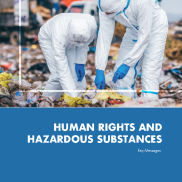
Key Messages on Human Rights and Hazardous Substances

Pollution is the largest source of premature death in the developing world, causing approximately three times more deaths than HIV/AIDS, tuberculosis and malaria combined (2018 Report of the Lancet Commission on pollution and health). It disproportionately affects persons, groups and peoples in vulnerable situations reflecting both historical and ongoing discrimination, racism, and power imbalances that have given rise to powerful social movements for environmental justice. Those responsible for the harmful impacts of hazardous substances must be held legally accountable for
Emerging Policy Issues: Chemicals in products
Policy document

Pharmaceuticals in the environment

by |
December 2020
copied to clipboard
Medicinal products are physiologically highly active substances that enter the water and soil, particularly through human and animal excretion. They are being detected in the environment to a greater and greater extent, often in concentrations that are not harmless to humans and other living organisms. The consumption of pharmaceuticals is increasing, mainly due to the aging of the population. Consequently, measures to reduce environmental pollution are therefore necessary.
Emerging Policy Issues: Pharmaceutical pollutants
Policy document

Eliminating Lead Paint: The Role of the Paint Industry

by |
October 2020
copied to clipboard
The Strategic Approach to International Chemicals Management (SAICM) is a global policy framework which aims to protect human health and the environment from the unsound management of chemicals and waste. Since its inception in 2006, the voluntary and multisectoral and multistakeholder nature of SAICM has been viewed as one of its core strengths. SAICM provided a space for government and non-government actors alike to discuss and deliberate on the management of chemicals and waste.A key obstacle that has been limiting
Emerging Policy Issues: Lead in paint
Manuals and toolkits

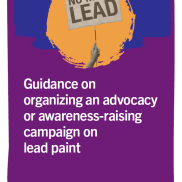
Guidance on organizing an advocacy or awareness-raising campaign on lead paint

This document has been developed as part of a project to accelerate progress towards the establishment of legally binding controls on the manufacture, sale, distribution, import and use of lead paint in countries, funded by the Global Environment Facility (GEF) and executed by the Secretariat of the Strategic Approach to International Chemicals Management (SAICM). It is a contribution to the work of the Global Alliance to Eliminate Lead Paint (the Lead Paint Alliance). The Lead Paint Alliance is a voluntary
Emerging Policy Issues: Lead in paint
Policy document

Lessons from the past to inform SAICM and the Sound Management of Chemicals and Waste Beyond 2020

by |
October 2020
copied to clipboard
An Independent Evaluation of SAICM over the 2006 to 2015 period (SAICM/IP3/INF/3) was conducted to assess the degree by which SAICM has delivered on its 2020 goal. It finds that SAICM made significant progress in a number of areas in terms of strengthening capacity, commitment, technical knowledge and political will to implement and mainstream chemicals into national planning. However, the evaluation also reconfirms the findings of the Global Chemicals Outlook II, that SAICM’s objectives and 2020 goal would not be
Policy document

Role of economic instruments for the sound management of chemicals and waste

by |
September 2020
copied to clipboard
“The vast majority of human health costs linked to chemicals production, consumption, and disposal are not borne by chemicals producers, nor shared down the value-chain.” GCO-IThis policy brief draws from and complements: ‘Review of cost recovery mechanisms and other economic instruments for financing of the sound management of chemicals and waste’ (SAICM/IP.4/7). With the Beyond 2020 framework for chemicals and waste under deliberation, and key outcomes expected at the fifth session of the International Conference on Chemicals Management (ICCM5) in
Manuals and toolkits

Brief guide to analytical methods for measuring lead in blood (Second edition)

Lead is a toxic metal whose widespread use has caused extensive environmental contamination and health problems in many parts of the world. Lead is a cumulative toxicant that affects multiple body systems, including the neurological, haematological, gastrointestinal, cardiovascular, musculoskeletal and renal systems. Long-term effects include increased risk of hypertension, ischaemic heart disease and renal disease. Children are particularly vulnerable to the neurotoxic effects of lead, and even low levels of exposure can impair cognitive development and cause behavioural disorders. These
Emerging Policy Issues: Lead in paint
Policy document

Global elimination of lead paint: why and how countries should take action - Policy brief

Lead has toxic effects on almost all body systems and is especially harmful for children and pregnant women. Lead paint is an avoidable source of exposure to lead. “Lead paint” or “lead-based paint” is paint to which one or more lead compounds have been intentionally added by the manufacturer to obtain specific characteristics. One important way to prevent exposure is for countries to establish legally binding regulatory measures prohibiting the addition of lead to paint.This policy brief summarizes key information
Emerging Policy Issues: Lead in paint
Avatar
