77 resources found

Academic article

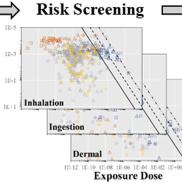
Chemicals of concern in plastic toys

by
ScienceDirect
|
October 2020
copied to clipboard
We present a list of Chemicals of Concern (CoCs) in plastic toys. We started from available studies reporting chemical composition of toys to group plastic materials, as well as to gather mass fractions and function of chemicals in these materials. Chemical emissions from plastic toys and subsequent human exposures were then estimated using a series of models and a coupled near-field and far-field exposure assessment framework. Comparing human doses with reference doses shows high Hazard Quotients of up to 387
Emerging Policy Issues: Chemicals in products
Policy document

Lessons from the past to inform SAICM and the Sound Management of Chemicals and Waste Beyond 2020
by |
October 2020
copied to clipboard
An Independent Evaluation of SAICM over the 2006 to 2015 period (SAICM/IP3/INF/3) was conducted to assess the degree by which SAICM has delivered on its 2020 goal. It finds that SAICM made significant progress in a number of areas in terms of strengthening capacity, commitment, technical knowledge and political will to implement and mainstream chemicals into national planning. However, the evaluation also reconfirms the findings of the Global Chemicals Outlook II, that SAICM’s objectives and 2020 goal would not be
Academic article

Alternative societal solutions to pharmaceuticals in the aquatic environment

by
ScienceDirect
|
September 2020
copied to clipboard
Environmental contamination with pharmaceuticals is widespread, inducing risks to both human health and the environment. This paper explores potential societal solutions to human and veterinary pharmaceuticals in the aquatic environment. To this end, we adopt transition research’s multi-level perspective framework, which allows us to understand the dynamics underlying pharmaceutical emissions and to recognize social and technical factors triggering change. The authors' qualitative analysis is based on data collected through literature research and interviews with actors from pharmaceutical industry, the health
Emerging Policy Issues: Pharmaceutical pollutants
Policy document

Role of economic instruments for the sound management of chemicals and waste

by |
September 2020
copied to clipboard
“The vast majority of human health costs linked to chemicals production, consumption, and disposal are not borne by chemicals producers, nor shared down the value-chain.” GCO-IThis policy brief draws from and complements: ‘Review of cost recovery mechanisms and other economic instruments for financing of the sound management of chemicals and waste’ (SAICM/IP.4/7). With the Beyond 2020 framework for chemicals and waste under deliberation, and key outcomes expected at the fifth session of the International Conference on Chemicals Management (ICCM5) in
Policy document

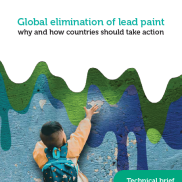
Global elimination of lead paint: why and how countries should take action - Policy brief

Lead has toxic effects on almost all body systems and is especially harmful for children and pregnant women. Lead paint is an avoidable source of exposure to lead. “Lead paint” or “lead-based paint” is paint to which one or more lead compounds have been intentionally added by the manufacturer to obtain specific characteristics. One important way to prevent exposure is for countries to establish legally binding regulatory measures prohibiting the addition of lead to paint.This policy brief summarizes key information
Emerging Policy Issues: Lead in paint
Policy document

Global elimination of lead paint: why and how countries should take action - Technical brief

This document has been developed for officials in government who have a role in regulating lead paint, to provide them with concise technical information on the rationale and steps required to phase out lead paint. “Lead paint” or “lead-based paint” is paint to which one or more lead compounds have been intentionally added by the manufacturer to obtain specific characteristics. This document explains the health and economic importance of preventing lead exposure by establishing legally binding controls to stop the
Emerging Policy Issues: Lead in paint
Policy document

Plastics and Chemicals of Concern In Consumer Products

Plastics are used across the economy and in diverse downstream sectors such as packaging, construction, transportation, healthcare, textiles, and electronics. Durable products, ranging from construction materials to medical devices make up nearly half of the global plastics market, while packaging products are the largest uses of single-use plastics. Some plastics contain chemicals that are considered to be harmful for health and the environment. Phthalates, poly-fluorinated chemicals, bisphenol A (BPA), brominated flame retardants and antimony trioxide are considered most harmful for
Emerging Policy Issues: Chemicals in products
Topics: Circularity
Policy document

New digital technologies to tackle trade in illegal pesticides

Global trade in illegal pesticides has been steadily growing in recent years, posing serious threats to agriculture, the environment, human health, and the economy. Evidence of this trend can be found in the increasing number of seizures of counterfeit, fake, and unauthorised pesticides, as well as their growing share in the global pesticide market. This paper identifies the main drivers and enablers of this illicit trade, and explores the potential of digital technologies, such as blockchain, to support policies to
Avatar