6 resources found

E-learning

Massive Open Online Course on Marine Litter

UN Environment Programme and Open Universiteit have created a Massive Open Online Course (MOOC) on Marine Litter as a key activity of the Global Partnership on Marine Litter (you can join the GPML). It is also part of the Clean Seas Campaign. The course starts on October 26, 2020. It is free for all students and available in 10 different languages. You can still enroll until November 15. Register here!Marine litter is a global problem that affects every ocean of
E-learning

E-learning on Multilateral Environmental Agreements

Free online courses on the Multilateral Environmental Agreements in various topics: biological diversity, chemicals and waste, climate and atmosphere, environmental governance, marine and freshwater, land and agriculture.These courses are hosted by the United Nations Information Portal on Multilateral Environmental Agreements (InforMEA)
E-learning

UN Environment Programme and Partners Massive Open Online Courses (MOOCs)

Suite of online Massive Open Online Courses (MOOCs), developed by the UN Environment Programme and partners on different topics:Marine litterUrban metabolism for policy makersIntroduction to life cycle thinkingEnvironmental security and sustaining peaceDisasters and ecosystems: Resilience in a changing climateWheels of metals: Urban mining for a circular economyFood and our future: Sustainable Food Systems in Southeast AsiaGreening consumption and productionClose the Loop - SDG 12 Introduction to Sustainable Consumption and production in LACAll courses are available here
E-learning

The E-Waste Challenge

This course will help the participants to understand why and how to manage e-waste in an environmentally sound manner and how action on e-waste could be taken in their own life, business, or organization.The aims of the course are to:Show how sound management of e-waste can help reduce GHG emissions, mitigate climate change and prevent hazards to health and the environment in accordance with the Basel, Rotterdam, and Stockholm conventions;Share best practices, technological innovations, and sustainable e-waste recovery and inclusive

Infographic

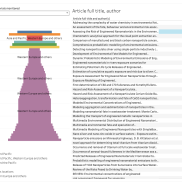
Interactive country profiles

February 2020
copied to clipboard
ContextTo address the recognized deficiencies mentioned above, it’s essential to have a ‘chemicals ecosystem (SAICM ecosystem)’ in which relevant information can be shared transparently and easy to obtain. In this ‘chemicals ecosystem’, a holistic chemicals-information-sharing hub, serving as ‘database’ and ‘scanner’ on chemicals management, should be developed to provide connection on knowledge and information from a wide variety of sources and allow stakeholders to identify their gaps on the way towards the sound management of chemicals and waste. Last but
Avatar