10 resources found

Policy document

A review of PFAS as a Chemical Class in the Textiles Sector - Policy Brief

For over a decade, under both SAICM and the Stockholm Convention on Persistent Organic Pollutants (POPs), the class of chemicals known as PFAS is gaining increasing international attention. Since 2009, chemicals in products have been identified as an Emerging Policy Issue and PFAS as an Issue of Concern by the SAICM. The textiles sector is currently considered in the SAICM context through the ‘Chemicals in Products Programme’, which focuses on four priority sectors: textiles, toys, building products and electronics. The
Database

Lead in paint laboratory database

The Lead in Paint Laboratory Database lists laboratories from all UN regions capable of identifying and quantifying lead in paint samples.It is established by UNEP in close cooperation with the United States Environmental Protection Agency and the World Health Organization as part of an activity of the Global Alliance to Eliminate Lead Paint. For each listed laboratory, the databank offers publicly available information of interest, such as contact details, number of staff, instrumentation, analytical techniques, accreditation, etc. This database of
Emerging Policy Issues: Lead in paint
Database

Chemical Entities of Biological Interest

by
European Bioinformatics Institute
|
January 2021
copied to clipboard
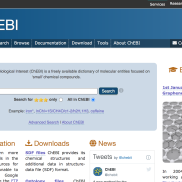
Chemical Entities of Biological Interest, also known as ChEBI is a chemical database and ontology of molecular entities focused on 'small' chemical compounds, that is part of the Open Biomedical Ontologies (OBO) effort at the European Bioinformatics Institute (EBI).The term "molecular entity" refers to any "constitutionally or isotopically distinct atom, molecule, ion, ion pair, radical, radical ion, complex, conformer, etc., identifiable as a separately distinguishable entity". The molecular entities in question are either products of nature or synthetic products which
Database

Chemical Awareness toolkit

What is CAt and where does all the data come from?The Chemical Awareness toolkit (CAt) is a free web application that provides rapid access to chemical information for product stewards, risk assessors, toxicologists, chemists, microbiologists, engineers, and other researchers. It includes screening tools that provide chemical information including toxicological hazards, environmental fate, persistence & bioaccumulation, occupational exposure limits, government regulations, and public perception.CAt utilizes an integrated database containing information from key lists provided by Verisk 3E, publicly available lists, databases
Emerging Policy Issues: Chemicals in products
Policy document

Role of economic instruments for the sound management of chemicals and waste

by |
September 2020
copied to clipboard
“The vast majority of human health costs linked to chemicals production, consumption, and disposal are not borne by chemicals producers, nor shared down the value-chain.” GCO-IThis policy brief draws from and complements: ‘Review of cost recovery mechanisms and other economic instruments for financing of the sound management of chemicals and waste’ (SAICM/IP.4/7). With the Beyond 2020 framework for chemicals and waste under deliberation, and key outcomes expected at the fifth session of the International Conference on Chemicals Management (ICCM5) in
Policy document

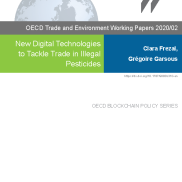
New digital technologies to tackle trade in illegal pesticides

Global trade in illegal pesticides has been steadily growing in recent years, posing serious threats to agriculture, the environment, human health, and the economy. Evidence of this trend can be found in the increasing number of seizures of counterfeit, fake, and unauthorised pesticides, as well as their growing share in the global pesticide market. This paper identifies the main drivers and enablers of this illicit trade, and explores the potential of digital technologies, such as blockchain, to support policies to
Database

Database of IOMC activities in countries

The database of IOMC activities in countries provides an overview of where individual IOMC organizations are working on chemicals issues in countries.The entries relate to country-specific activities and not normative or general activities applicable to many countries, such as the development of guidelines. Information from the Secretariat of the Basel, Rotterdam and Stockholm Conventions is included as the Secretariat is an observer to the IOMC.
Policy document

Challenges for a Sustainable Chemicals and Materials Policy: The Need for Transformation in the Global Context

by |
December 2019
copied to clipboard
Over the past few years the use of natural resources and the production of chemicals have increased dramatically – and a further increase is forecast. Whereas earlier the main focus was on local effects on health and the environment, in the meantime it has become clear that current ways of dealing with natural resources, chemicals and products manufactured from chemicals are threatening the biosphere as a whole.In 2009 and 2015 scientists introduced the concept of planetary boundaries. As part of
Avatar