37 resources found

Factsheets and brochures

Using a value chain approach to reduce chemicals of concern

by |
October 2021
copied to clipboard
Chemicals of concern (CoCs) contained in everyday products can have harmful impacts on human health and the environment. While chemical-related impacts can often occur during a product’s use or end-of-life, decisions influencing product ingredients are taken further upstream of the value chain. Action to address CoCs in products thus need to consider the entire value chain and impactful interventions need to be made at upstream stages to protect human health and the environment from chemical pollution. UNEP is working on
Report

Regional Electronics Study and Circularity Roadmap in the LAC Region: Mapping of Existing Initiatives

Technological development has made electrical and electronic equipment (EEE1) essential parts of contemporary life and indispensable products in today’s societies. Information technology (IT) combined with the technological advances in recent decades, has resulted in EEE having a great influence on the daily life of consumers in aspects such as health, safety, knowledge, comfort information, among others. The global consumption of electronics is growing 2.5 million metric tons per year (Forti, Baldé, Kuehr, & Bel, 2020), because technology increases the living

Report

Mapping of Stakeholders for the Regional Electronics Study and Circularity Roadmap in the Latin America and The Caribbean

This document has been developed within the framework of the Global Environment Facility (GEF) project ID: 9771 on Global Best Practices on Emerging Chemical Policy Issues of Concern under the Strategic Approach to International Chemicals Management (SAICM). This project is funded by the GEF, implemented by UNEP and executed by the SAICM Secretariat.Under the project, UNEP is partnering with Universidad El Bosque to develop a Regional Electronics Study and Circularity Roadmap in the Latin America and the Caribbean (LAC) Region

Report

Review of chemicals related Toy Safety Policies and Regulations in selected Low and Middle Income Countries

by |
April 2021
copied to clipboard
With a total revenue of more than 90 billion USD in 2018, the global toy market is an important sector of consumer products. Like many other products, toys are composed of a diverse range of materials. Many of these materials are made of, or contain manufactured chemicals. Most of these chemicals are intentionally added, but some can also be present as unintended contaminants.Many chemicals have properties that can make them hazardous to human health and/or the environment. The potential use
Emerging Policy Issues: Chemicals in products
Report

Used Vehicles and the Environment

by |
October 2020
copied to clipboard
Used Vehicles and the Environment - A Global Overview of Used Light Duty Vehicles: Flow, Scale and RegulationMillions of used cars, vans and minibuses exported from Europe, the USA and Japan to low- and middle-income countries are hindering efforts to combat climate change. They are contributing to air pollution and are often involved in road accidents. Many of them are of poor quality and would fail road-worthiness tests in the exporting countries.A landmark, first-of-its-kind United Nations Environment Programme (UNEP) report
Emerging Policy Issues: Chemicals in products
Topics: Circularity
Academic article

Chemicals of concern in plastic toys

by
ScienceDirect
|
October 2020
copied to clipboard
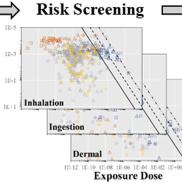
We present a list of Chemicals of Concern (CoCs) in plastic toys. We started from available studies reporting chemical composition of toys to group plastic materials, as well as to gather mass fractions and function of chemicals in these materials. Chemical emissions from plastic toys and subsequent human exposures were then estimated using a series of models and a coupled near-field and far-field exposure assessment framework. Comparing human doses with reference doses shows high Hazard Quotients of up to 387
Emerging Policy Issues: Chemicals in products
Policy document

Plastics and Chemicals of Concern In Consumer Products

Plastics are used across the economy and in diverse downstream sectors such as packaging, construction, transportation, healthcare, textiles, and electronics. Durable products, ranging from construction materials to medical devices make up nearly half of the global plastics market, while packaging products are the largest uses of single-use plastics. Some plastics contain chemicals that are considered to be harmful for health and the environment. Phthalates, poly-fluorinated chemicals, bisphenol A (BPA), brominated flame retardants and antimony trioxide are considered most harmful for
Emerging Policy Issues: Chemicals in products
Topics: Circularity
Academic article

Life cycle based alternatives assessment (LCAA) for chemical substitution

by
Green Chemistry
|
July 2020
copied to clipboard
AbstractThe world faces an increasing need to phase out harmful chemicals and design sustainable alternatives across various consumer products and industrial applications. Alternatives assessment is an emerging field focusing on identifying viable solutions to substitute harmful chemicals. However, current methods fail to consider trade-offs from human and ecosystem exposures, and from impacts associated with chemical supply chains and product life cycles. To close this gap, we propose a life cycle based alternatives assessment (LCAA) framework for consistently integrating quantitative exposure
Avatar