4 resources found

Cover
Manuals and toolkits

Eco-innovation (Eco-i) manual – Building Materials Supplement

UNEP's new Eco-innovation Building Materials Supplement was created to respond to the building material sector's need for more guidance in building resilient, competitive, and sustainable business models for SMEs. Designed together with Bioregional, pilot implementation support of the National Cleaner Production Centre (NCPC) Sri Lanka and to be read alongside UNEP's Eco-innovation Manual, the supplement provides specific examples, learning case studies, and advice on applying the eco-innovation methodology within the building materials value chain.

eco-i_electronics
Manuals and toolkits

Eco-innovation (Eco-i) manual – Electronics Supplement

by |
December 2022
copied to clipboard

UNEP's new Eco-innovation Electronics Supplement was created to respond to the electronics sector's need for more guidance in building resilient, competitive, and sustainable business models for SMEs. Designed together with the World Resources Forum and to be read alongside UNEP's Eco-innovation (Eco-i) Manual, the supplement provides electronics specific examples, learning case studies, and advice on applying the eco-innovation methodology and its opportunities in the electronic sector.

This publication was prepared under the framework of the Global Environment Facility (GEF) full-sized project 9771: Global best practices on emerging chemical policy issues of concern under the Strategic Approach to International Chemicals Management (SAICM). This project is funded by the GEF, implemented by UNEP and executed by the SAICM Secretariat.

Factsheets and brochures

Case studies on the implementation of the WHO Chemicals Road Map

The World Health Organization is publishing a series of national case studies on the implementation of the WHO Chemicals Road map, which was adopted in World Health Assembly Decision 70(23).The case studies were developed by different Member States, including members of the Global Chemicals and Health Network. They illustrate the role the health sector plays in the sound management of chemicals, recognizing the need for multi-sectoral cooperation at a national level.The case studies concentrate on different actions of the road
Factsheets and brochures

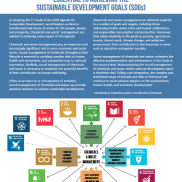
Chemicals and waste management: essential to achieving the Sustainable Development Goals (SDGs)

by |
October 2019
copied to clipboard
In adopting the 17 Goals of the 2030 Agenda for Sustainable Development, world leaders outlined a transformational course of action for the people, planet, and prosperity. Chemicals and waste management are related to achieving every aspect of this Agenda.Chemicals and waste management play an important and increasingly significant role in every economic and social sector. Sound management of chemicals throughout their lifecycle is essential to avoiding complex risks to human health and ecosystems, and substantial costs to national economies. Similarly
Avatar