6 resources found

Factsheets and brochures

Lead Paint Factsheet

by |
November 2019
copied to clipboard
This factsheet presents the work of UNEP and the Lead Paint Alliance. The document also highlights its impacts and the SAICM GEF project Lead in paint component.
Emerging Policy Issues: Lead in paint
Factsheets and brochures

Case studies on the implementation of the WHO Chemicals Road Map

The World Health Organization is publishing a series of national case studies on the implementation of the WHO Chemicals Road map, which was adopted in World Health Assembly Decision 70(23).The case studies were developed by different Member States, including members of the Global Chemicals and Health Network. They illustrate the role the health sector plays in the sound management of chemicals, recognizing the need for multi-sectoral cooperation at a national level.The case studies concentrate on different actions of the road
Factsheets and brochures

Questions & Answers on Lead

Questions and answers on lead from the World Health Organization:What is lead? What is lead poisoning? What are the health effects of lead exposure? What are the costs associated with lead exposure? What are the sources of human exposure to lead? How important are used lead-acid batteries as a source of lead exposure? What is lead paint? Why is lead paint an important source of human exposure? What are the economic costs of lead paint? What is the Global Alliance
Emerging Policy Issues: Lead in paint
Factsheets and brochures

Chemicals and waste management: essential to achieving the Sustainable Development Goals (SDGs)

by |
October 2019
copied to clipboard
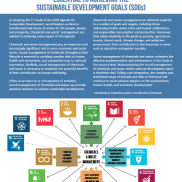
In adopting the 17 Goals of the 2030 Agenda for Sustainable Development, world leaders outlined a transformational course of action for the people, planet, and prosperity. Chemicals and waste management are related to achieving every aspect of this Agenda.Chemicals and waste management play an important and increasingly significant role in every economic and social sector. Sound management of chemicals throughout their lifecycle is essential to avoiding complex risks to human health and ecosystems, and substantial costs to national economies. Similarly
Factsheets and brochures

Lead poisoning and health

This factsheet compiles the latest information on the effects of lead on human health. It is presented in the 6 UN languages.The factsheet lists the Key Facts, and describes the Sources and routes of exposure, the Health effects of lead poisoning on children, and the WHO response. The factsheet also points to relevant related websites.
Emerging Policy Issues: Lead in paint
Factsheets and brochures

Pollinators and Pesticides - Keeping our bees safe

Pollination is the transfer of pollen between the male and female parts of flowers to enable fertilization and reproduction. The majority of cultivated and wild plants depend on animal vectors, known as pollinators, to transfer pollen. However, other means of pollen transfer such as self-pollination or wind-pollination are also important. Pollinators comprise a diverse group of animals dominated by insects, especially bees. More than 75% of the leading types of global good crops are visited by animal pollinators, such as
Emerging Policy Issues: Highly Hazardous Pesticides
Avatar