33 resources found

Video

SAICM Emerging Policy Issues Video

Have you ever noticed how many chemicals shape people’s daily lives? They keep homes sparkling clean, boost food production, and are included in virtually all manufactured goods surrounding you right now. Chemicals drive the economy but as we produce more than ever before, they have to deliver their benefits without damaging our health and environment.Toxic lead paint for example is still used in many regions of the world and Highly hazardous pesticides continue to poison agricultural workers and contaminate the
Factsheets and brochures

SAICM Factsheet

by |
November 2019
copied to clipboard
The ChallengeThe Strategic Approach To International Chemicals Management (SAICM) mandate expires in 2020, long before we will reach the target of minimizing the health and environmental impacts of chemicals throughout their lifecycle. Overall progress has been uneven and there is still a significant need for development and implementation of effective chemical and waste management policies and practices around the globe.What We DoSAICM provides a valuable multi-stakeholder forum to discuss and address the many challenges facing the adoption and implemen-tation of
Manuals and toolkits

Handbook on Sustainable Public Procurement - Integration Sustainability Criteria into Public Procurement Procedures for Paints and Varnishes, Cleaning Products, Heat Insulation Materials

November 2017
copied to clipboard
Public Procurement is closely interconnected with an implementation of the sustainable development goals on the practice. Given priority to environmentally friendly products and environmentally safety services, which comply with green standards and rules, is an efficient tool in solving of many economic, environmental and social challenges at different levels.This handbook contains a basic information about benefits and advantages of the sustainable public procurement for government and public authorities; a step–by–step explanations how to transform a procurement process into sustainable one
Emerging Policy Issues: Chemicals in products
Report

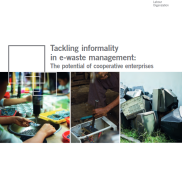
Tackling informalityin e-waste management: The potential of cooperative enterprises

December 2014
copied to clipboard
The present paper is the product of a joint effort by the Sectoral Activities Depart-ment and the Cooperatives Unit of the International Labour Organization (ILO).This initiative supports the ILO’s commitment to promote forms of employment that safeguard the environment, eradicate poverty and promote social justice through sustainable enterprises and decent work, as reinforced by the International Labour Con-ference (ILC), at its 102nd session in June 2013. Electrical and electronic waste (e-waste) is currently the fastest growing waste stream, and it
Report

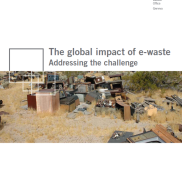
The global impact of e-waste: Addressing the challenge

December 2012
copied to clipboard
Electrical and electronic waste (e-waste) is currently the largest growing waste stream. It is hazardous, complex and expensive to treat in an environmentally sound manner, and there is a general lack of legislation or enforcement surrounding it.Today, most e-waste is being discarded in the general waste stream. Of the e-waste in developed countries that is sent for recycling, 80 per cent ends up being shipped (often illegally) to developing countries to be recycled by hundreds of thou-sands of informal workers
Avatar