25 resources found

Report

Sustainable Building Finance: Supporting green mortgage development in Sri Lanka

by |
December 2021
copied to clipboard
A GEF-funded (Global Environment Facility) project on “Global best practices on emerging chemical policy issues of concern under SAICM” was launched in 2019, targeting Sri Lanka amongst other countries. The activities under the project include a focus on tracking and controlling chemicals along the value chains of the building and construction sector. To that end, a team from the UN Environment Programme (UNEP) have been working with stakeholders in Sri Lanka on identifying chemicals of concern in the construction material
Report

Regional Electronics Study and Circularity Roadmap in the LAC Region: Mapping of Existing Initiatives

Technological development has made electrical and electronic equipment (EEE1) essential parts of contemporary life and indispensable products in today’s societies. Information technology (IT) combined with the technological advances in recent decades, has resulted in EEE having a great influence on the daily life of consumers in aspects such as health, safety, knowledge, comfort information, among others. The global consumption of electronics is growing 2.5 million metric tons per year (Forti, Baldé, Kuehr, & Bel, 2020), because technology increases the living

E-learning

The E-Waste Challenge

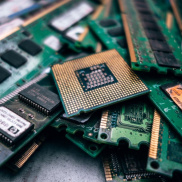
This course will help the participants to understand why and how to manage e-waste in an environmentally sound manner and how action on e-waste could be taken in their own life, business, or organization.The aims of the course are to:Show how sound management of e-waste can help reduce GHG emissions, mitigate climate change and prevent hazards to health and the environment in accordance with the Basel, Rotterdam, and Stockholm conventions;Share best practices, technological innovations, and sustainable e-waste recovery and inclusive

Manuals and toolkits

Handbook on Sustainable Public Procurement - Integration Sustainability Criteria into Public Procurement Procedures for Paints and Varnishes, Cleaning Products, Heat Insulation Materials

November 2017
copied to clipboard
Public Procurement is closely interconnected with an implementation of the sustainable development goals on the practice. Given priority to environmentally friendly products and environmentally safety services, which comply with green standards and rules, is an efficient tool in solving of many economic, environmental and social challenges at different levels.This handbook contains a basic information about benefits and advantages of the sustainable public procurement for government and public authorities; a step–by–step explanations how to transform a procurement process into sustainable one
Emerging Policy Issues: Chemicals in products
Report

Global Waste Management Outlook

Better waste management offers great potential to help us meet the sustainability challenges ahead. Targeting decision-makers and many other inter-connected sectors, the Global Waste Management Outlook (GWMO) was launched at the World Congress of The International Solid Waste Association (ISWA) in Belgium on 7 September, 2015 . The publication also contains two summary documents, making the information concise and accessible.Developed by UNEP in collaboration with ISWA in response to the UNEP Governing Council request of February 2013, its goal was
Report

Tackling informalityin e-waste management: The potential of cooperative enterprises

December 2014
copied to clipboard
The present paper is the product of a joint effort by the Sectoral Activities Depart-ment and the Cooperatives Unit of the International Labour Organization (ILO).This initiative supports the ILO’s commitment to promote forms of employment that safeguard the environment, eradicate poverty and promote social justice through sustainable enterprises and decent work, as reinforced by the International Labour Con-ference (ILC), at its 102nd session in June 2013. Electrical and electronic waste (e-waste) is currently the fastest growing waste stream, and it
Report

The global impact of e-waste: Addressing the challenge

December 2012
copied to clipboard
Electrical and electronic waste (e-waste) is currently the largest growing waste stream. It is hazardous, complex and expensive to treat in an environmentally sound manner, and there is a general lack of legislation or enforcement surrounding it.Today, most e-waste is being discarded in the general waste stream. Of the e-waste in developed countries that is sent for recycling, 80 per cent ends up being shipped (often illegally) to developing countries to be recycled by hundreds of thou-sands of informal workers
Avatar