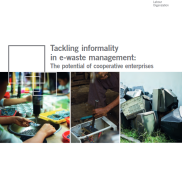
Electrical and electronic equipment when becoming waste (e-waste) such as personal computers, printers, televisions, mobile phones, refrigerators and air-conditioning units is one of the fastest-growing waste streams in the world today.
E-waste is categorized as hazardous waste due to the presence of toxic materials such as mercury, lead and brominated flame retardants are considered as hazardous waste according to the Basel Convention. E-waste may also contain precious metals such as gold, copper and nickel and rare materials of strategic value such as indium and palladium. These precious and heavy metals could be recovered, recycled and used as valuable source of secondary raw materials. It has been documented that e-wastes are shipped to developing countries where it is often not managed in an environmentally sound manner, thus posing a serious threat to both human health and the environment.
Related EPIs
Related people
Ran Xie
Robert J. Reinhardt
Muhammad Farooq
Dhrumil Soni
As we strive towards a better world, we work to ensure chemistry’s contributions are realized. Chemistry can help us to understand, monitor, protect and improve the environment around us.
Florisvindo Furtado
By contributing to the creation and enforcement of national and international legal framework on chemicals and hazardous wastes as well as the related guidelines for the main industry stakeholders and operators, dealing with chemicals or producing
Leonard Tampushi
Related projects
Articles of interest
6 resources found
Toward a Circular Economy for the Electronics Sector in Latin America and the Caribbean (LAC): Overview, Actions and Recommendations
This report provides an overview of the current status and conditions of the Circular Economy in the electronics value chain in the Latin America and the Caribbean (LAC) region, identifies key areas of concern, provides appropriate recommendations, and proposes priority actions to improve circularity of the sector. The recommendations and roadmap focus on the individual life cycle stages of the electronics value chain, as well as on aspects that cut across the value chain. The transition towards a more circular electronics sector in Latin America and the Caribbean (LAC) would require a holistic and coordinated approach to progress toward a more circular electronics value chain in the CEE region.
This publication was prepared under the framework of the Global Environment Facility (GEF) full-sized project 9771: Global best practices on emerging chemical policy issues of concern under the Strategic Approach to International Chemicals Management (SAICM). This project is funded by the GEF, implemented by UNEP and executed by the SAICM Secretariat.
Toward a Circular Economy for the Electronics Sector in Central and Eastern Europe: Overview, Actions and Recommendations
This report provides an overview of the current status and conditions of the Circular Economy in the electronics value chain in the Central and Eastern Europe (CEE) region, identifies key areas of concern, provides appropriate recommendations, and proposes priority actions to improve circularity of the sector. The recommendations and roadmap focus on the individual life cycle stages of the electronics value chain, as well as on aspects that cut across the value chain. The transition towards a more circular electronics sector in Central and Easter Europe (CEE) would require a holistic and coordinated approach to progress toward a more circular electronics value chain in the CEE region.
This publication was prepared under the framework of the Global Environment Facility (GEF) full-sized project 9771: Global best practices on emerging chemical policy issues of concern under the Strategic Approach to International Chemicals Management (SAICM). This project is funded by the GEF, implemented by UNEP and executed by the SAICM Secretariat.
Regional Electronics Study and Circularity Roadmap in the LAC Region: Mapping of Existing Initiatives
Technological development has made electrical and electronic equipment (EEE1) essential parts of contemporary life and indispensable products in today’s societies. Information technology (IT) combined with the technological advances in recent decades, has resulted in EEE having a great influence on the daily life of consumers in aspects such as health, safety, knowledge, comfort information, among others. The global consumption of electronics is growing 2.5 million metric tons per year (Forti, Baldé, Kuehr, & Bel, 2020), because technology increases the living