24 resources found

Newsletter

Lead Paint Alliance Newsletter

The Global Alliance to Eliminate Lead Paint is working to achieve the phase-out of the manufacture, sale and import of paints containing lead through the establishment of laws. The Lead Paint Alliance publishes a regular newsletter to inform its partners and interested stakeholders on the latest achievements and progress towards its goal.In the newsletter, you will find news articles on lead paint, updates about global efforts to address the issue, progress towards law, and update about our partners.

Emerging Policy Issues: Lead in paint
Case studies

Future Policy Award 2021: Colombia - Environmentally Persistent Pharmaceutical Pollutants

Despite the fact that pharmaceuticals are indispensable for human and animal health, they may cause undesired adverse effects. Specifically, environmentally persistent pharmaceutical pollutants (EPPPs) are slowly degradable or nondegradable, presenting a special risk when they enter, persist or disseminate in the environment. Colombia’s Resolution 371, addressing EPPPs, was awarded for regulating waste management from hazardous products.The World Future Council focuses on identifying, developing, highlighting and spreading effective, future-just solutions for current challenges humanity is facing and promote their implementation worldwide

Newsletter

Era of leaded petrol over, eliminating a major threat to human and planetary health

by |
September 2021
copied to clipboard
Official end of use of leaded petrol will prevent more than 1.2 million premature deaths and save USD 2.45 trillion a yearThe end of leaded petrol follows a 19-year campaign led by the UN Environment Programme (UNEP) and partnersUNEP urges countries to work towards zero emissions vehicles to further address air pollution and climate changeNairobi, 30 August 2021 – When service stations in Algeria stopped providing leaded petrol in July, the use of leaded petrol ended globally. This development follows
Emerging Policy Issues: Chemicals in products

Case studies

Future Policy Award 2021: Sweden, Region Stockholm - Chemicals in products

Although chemicals are important components in many products, they may be released at any stage of the product life cycle, resulting in potential exposures of humans and the environment. The second 2021 Gold Awardee addressing Chemicals in Products is Sweden, Region Stockholm: Phase-Out Lists for Chemicals Hazardous to the Environment and Human Health (2012-2016, revised for 2017-2021).The World Future Council focuses on identifying, developing, highlighting and spreading effective, future-just solutions for current challenges humanity is facing and promote their implementation

Emerging Policy Issues: Chemicals in products
Case studies

Future Policy Award 2021: Sri Lanka - Pesticides

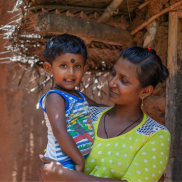
The Special Award Highly Hazardous Pesticides is one of the most ambitious and impactful solutions that minimizes the adverse effects of pesticides, which cause disproportionate harm to the environment and human health. Pesticides can cause severe environmental hazards, high acute, chronic toxicity and are also a very common suicide agent. Particularly, in Sri Lanka, two thirds of suicides were due to self-poisoning with pesticides. The Special Award Highly Hazardous Pesticides was awarded to Sri Lanka’s Control of Pesticides Act No

Case studies

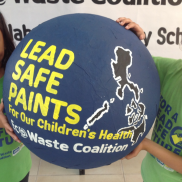
Future Policy Award 2021: Philippines - Lead in Paint

Lead is a cumulative toxic element particularly harmful to young children and pregnant women. Lead can be present at high levels in paint and is a major health concern specially in low and middle income countries. Philippines legislation towards lead-safe paint has provided safer alternatives to protect human health and the environment, actively involving all stakeholders. The Special Award Lead in Paint was awarded to Philippines’ Chemical Control Order for Lead and Lead Compounds (CCO, 2013-24).The World Future Council focuses

Emerging Policy Issues: Lead in paint Chemicals in products

Case studies

Future Policy Award 2021: Kyrgyzstan - Globally Harmonized System of Classification and Labelling of Chemicals

Globally Harmonized System of Classification and Labelling of Chemicals is a non-binding internationally agreed-upon system managed by the UN which defines and classifies the hazards of chemical products. Kyrgyzstan’s Resolution No. 43 on Approval of the Chemical Hazard Classification System and Hazard Information Requirements (2015) has legally bound GHS.The World Future Council focuses on identifying, developing, highlighting and spreading effective, future-just solutions for current challenges humanity is facing and promote their implementation worldwide. The Future Policy Award 2021 highlights exemplary

Emerging Policy Issues: Chemicals in products
Newsletter

UNEP Science Alerts - March 2019

by |
March 2020
copied to clipboard

UNEP's newsletter from March 2020 on scientific articles, research and knowledge on selected topics.TopicTitleChemicals and Waste / PollutionAdvancing environmental exposure assessment science to benefit society / A. Caplin et al. 2019. Nature.Assessment of air pollution caused by illegal e-waste burning to evaluate the human health risk / C. Gangwar et al. Environment International 125, Pages 191-199, 2019. ScienceDirect.A Comparison of hourly to annual air pollutant emissions: Implications for estimating acute exposure and public health risk / M. Stewart et al

Avatar