59 resources found

Garbage bags
Policy document

Towards a Lifecycle, Circular Approach to Combating Plastics Pollution

December 2022
copied to clipboard

This policy brief summarizes some of the issues/options being floated for consideration by the INC negotiators, as well as two crosscutting challenges identified in the submissions that the instrument should address, namely significant information/data gaps and problematic aspects of trade.

Emerging Policy Issues: Chemicals in products
Topics: Circularity
chemical contamination
Policy document

Addressing Industry Involvement in the Funding of Sound Management of Chemicals and Waste

This Policy Brief outlines the history behind the SAICM agenda, puts in context the issue of financing the sound management of chemicals and waste, and highlights the main findings and proposals from the SAICM study.

gender-case-studies-cover
Case studies

Women Leaders: Addressing Chemicals and Waste Issues

by
IPEN ,
|
June 2022
copied to clipboard

People of all gender identities must have the same rights and opportunities to participate fully in their communities, free from the health threats posed by toxic chemicals. It is especially important to understand the factors that put women at risk from chemical health threats.

The IPEN report “Women Leaders: Addressing Chemicals and Waste Issues” highlights women’s leadership through ten organizations from around the world working to address chemical health threats. The report was developed within the framework of the United Nations Environment Program and its Global Environment Facility (GEF), under the Strategic Approach to International Chemicals Management (SAICM), executed by the SAICM Secretariat. It was produced with support from the Swedish Government.

Women face greater risks from chemical exposures and experience higher rates of adverse health outcomes because of their physiology, different types of occupational exposures, and differential exposures to chemicals, including from personal care and household products. Women are also exposed to chemicals — such as endocrine disrupting chemicals, lead in paint, and chemicals in toys — that pose health threats during pregnancy and to their developing children.

These toxic exposures can lead to serious health problems that impact women’s lives and their opportunities to participate in their communities fully and equally. This is especially so for women in low-income communities who are often managing multiple pathways for toxic exposures and multiple obstacles to gender equality.

Women cannot be empowered nor gender equality achieved while exposures to hazardous chemicals put them at risk for cancer, chronic illnesses, infertility, and damage to their nervous systems.

In 2015, the United Nations Member States adopted the 2030 Agenda for Sustainable Development, which includes 17 Sustainable Development Goals (SDGs). “Gender Equality” is one of the goals (Goal 5) and the SDGs also recognize that gender equality is a prerequisite for reaching most of the other goals. Reducing and eliminating chemical exposures will also be essential for achieving all of the 17 goals.

The stories that follow highlight women across the globe who are leading work in their communities, nations, and internationally for stronger protections from harmful chemicals. Supporting their work and the work of countless other women who are leading similar efforts will be critical for achieving the SDGs.

Policy document

A review of PFAS as a Chemical Class in the Textiles Sector - Policy Brief

For over a decade, under both SAICM and the Stockholm Convention on Persistent Organic Pollutants (POPs), the class of chemicals known as PFAS is gaining increasing international attention. Since 2009, chemicals in products have been identified as an Emerging Policy Issue and PFAS as an Issue of Concern by the SAICM. The textiles sector is currently considered in the SAICM context through the ‘Chemicals in Products Programme’, which focuses on four priority sectors: textiles, toys, building products and electronics. The
Policy document

Chemicals of Concern in electronics: List of Lists and Regulatory Frameworks

Chemicals in products and hazardous substances within the life cycle of electrical and electronic products have been longstanding emerging policy issues under the Strategic Approach to International Chemicals Management (SAICM). In order to track and control chemicals along the value chains of electrical and electronic products, stakeholders first must identify relevant chemicals to be addressed. Considering the complexity of the chemical world as well as the complexity of value chains in the electronics sector, this important step can be highly
Policy document

Understanding chemicals in products: SAICM Policy Brief

by
SAICM , UNEP ,
|
November 2019
copied to clipboard

The transparency of information about chemicals in global supply chains has been an emerging policy issue for the Strategic Approach to International Chemicals Management (SAICM) since 2009, leading to programmes such as the UNEP Chemicals in Products (CiP) Programme. The CiP programme focuses specifically on the textiles, toys, electronics and building materials sectors.Information exchange in the value chain is key in identifying and addressing any chemicals of concern1 in products. Brands and retailers frequently lack crucial knowledge about the properties

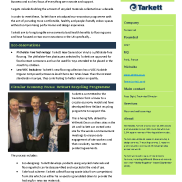
Tarkett-Case-Study
Case studies

Tarkett Sustainable Flooring Case Study

November 2019
copied to clipboard

Tarkett have introduced an eco-innovation programme with the aim of providing more comfortable, healthy and people-friendly indoor spaces without compromising performance and design experience. Key initiatives include:

  • Phthalate free technology in their New Generation Vinyl flooring;
  • Low VOC emissions in flooring;
  • ReStart Takeback and Recycling Programme, and use of recycled materials in new products.
Emerging Policy Issues: Chemicals in products
Policy document

Model Law and Guidance for Regulating Lead Paint

by
UNEP ,
|
July 2018
copied to clipboard

UN Environment, in cooperation with World Health Organization, United States Environment Protection Agency and other partners, has developed a model law and guidance in order to assist countries in establishing and implementing regulation on lead paint.The purpose of this guidance is to assist countries to enact new laws (or to modify their existing laws) to establish a single regulatory limit on the total lead content in paints. The guidance describes the key elements of effective and enforceable legal requirements. It

Emerging Policy Issues: Lead in paint
Topics: Policymaking

Avatar