18 resources found

Factsheets and brochures

Using a value chain approach to reduce chemicals of concern

by |
October 2021
copied to clipboard
Chemicals of concern (CoCs) contained in everyday products can have harmful impacts on human health and the environment. While chemical-related impacts can often occur during a product’s use or end-of-life, decisions influencing product ingredients are taken further upstream of the value chain. Action to address CoCs in products thus need to consider the entire value chain and impactful interventions need to be made at upstream stages to protect human health and the environment from chemical pollution. UNEP is working on
Policy document

Engaging the textiles industry as a key sector in SAICM: a review of PFAS as a chemical class in the textile sector

by
Natural Resources Defense Council (NRDC)
|
May 2021
copied to clipboard
The report examines the class approach for PFAS as it applies to the textile sector, which covers a wide variety of consumer products and connects two important issues covered in the SAICM context. The textile sector is an appropriate choice given the environmental significance of the sector and the scope of PFAS used within it. Both the quantity of PFAS in use and the variety of uses make this sector a priority for action. Furthermore, the nature of the sector—with
Emerging Policy Issues: Chemicals in products
Report

Single-Use Plastic Products (SUPP) and their alternatives: Recommendations from Life Cycle Assessments

UN Environment Programme (UNEP) defines single use plastic products as “an umbrella term for different types of products that are typically used once before being thrown away or recycled” (UNEP 2018), which includes food packaging, bottles, straws, containers, cups, cutlery and shopping bags. It has been estimated that about 100-150 million tonnes of plastics are produced for single use products and about 8 million tonnes of plastics are dumped into the oceans every year (Plastics Oceans 2019)There is a need
Emerging Policy Issues: Chemicals in products
Topics: Life Cycle
Manuals and toolkits

Guidance to Provide Footprint Information on Sustainable Alternatives

As there is an increase in communication of concrete recommendations for better solutions and alternatives to build a better economy that protects nature, there is an increased need to back these recommendations with facts and figures about how they contribute to reduce our impact on the planet.In this sense, the life cycle team has pulled together a very simple 2-page guidance on elements to consider when backing up your recommendations with strong life-cycle based science. The 2-pager also provides links
Emerging Policy Issues: Chemicals in products
Topics: Life Cycle
E-learning

Introduction to Life Cycle Thinking

This is one of the Life Cycle Initiative E-learning modules, with courses in English, French, Arabic and Spanish. This E-Learning Module Kit draws on materials from the Life Cycle Initiative and it is aimed at helping give all participants an overview of life cycle approaches while developing understanding as to how to assess the impacts of any given sustainability issue considering all of its life cycle stages. The module is also intended as a guide to which kind of LCT

Emerging Policy Issues: Chemicals in products
Topics: Life Cycle
Video

Global Chemicals Outlook 2019

The Global Chemicals Outlook II – From Legacies to Innovative Solutions: Implementing the 2030 Agenda for Sustainable Development, mandated by the UN Environment Assembly in 2016, seeks to alert policymakers and other stakeholders to the critical role of the sound management of chemicals and waste in sustainable development. It takes stock of global trends as well as progress made and gaps in achieving the global goal to minimize the adverse impacts from chemicals and waste by 2020. The Global Chemicals
Report

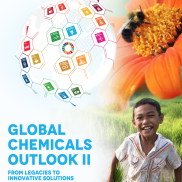
Global Chemicals Outlook II: From Legacies to Innovative Solutions

by |
April 2019
copied to clipboard
The Global Chemicals Outlook II – From Legacies to Innovative Solutions: Implementing the 2030 Agenda for Sustainable Development, mandated by the UN Environment Assembly in 2016, seeks to alert policymakers and other stakeholders to the critical role of the sound management of chemicals and waste in sustainable development. It takes stock of global trends as well as progress made and gaps in achieving the global goal to minimize the adverse impacts from chemicals and waste by 2020.Part I of the
Emerging Policy Issues: Chemicals in products
Avatar
