18 resources found

Policy document

Understanding chemicals in products: SAICM Policy Brief

by |
November 2019
copied to clipboard

The transparency of information about chemicals in global supply chains has been an emerging policy issue for the Strategic Approach to International Chemicals Management (SAICM) since 2009, leading to programmes such as the UNEP Chemicals in Products (CiP) Programme. The CiP programme focuses specifically on the textiles, toys, electronics and building materials sectors.Information exchange in the value chain is key in identifying and addressing any chemicals of concern1 in products. Brands and retailers frequently lack crucial knowledge about the properties

SAICM-USEtox_D2.1
Report

List of Chemicals of Concern and of potential alternatives for toys sector, with supporting information on criteria and selection

by |
September 2019
copied to clipboard

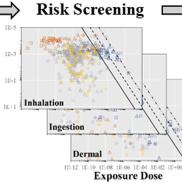
In this report, we present a list of Chemicals of Concern (CoCs) in plastic toys, with supporting information on the applied selection criteria. To identify the CoCs, we started from a literature review of available plastic toys compositions studies, and obtained the chemical mass fraction in plastic toy as well as the chemical functions. The chemical emissions from the plastic toys and subsequent human exposures were then estimated using a series of models and the coupled nearfield and far-field exposure assessment framework. Finally, the human exposure doses were compared to toxicity measures such as the reference dose (RfD), or median effective dose (ED50) for cancer effects, to evaluate the health risks on children. Chemical-material combinations that have a hazard quotient (HQ) > 10, a margin of exposure (MoE) < 100, or a lifetime cancer risk > 10-6 were included in the list of CoCs. In total, 35 (less than 10%) of all chemical-material combinations studied were identified as CoCs. The results indicate that a relevant amount of chemicals used in plastic toys may pose a non-negligible health risk to children, calling for more refined investigations and more human- and eco-friendly alternatives.

This document has been developed within the framework of the Global Environment Facility (GEF) project ID: 9771 on Global Best Practices on Emerging Chemical Policy Issues of Concern under the Strategic Approach to International Chemicals Management (SAICM). This project is funded by the GEF, implemented by UNEP and executed by the SAICM Secretariat.

Emerging Policy Issues: Chemicals in products
Report

Sustainable Building Finance: Supporting green mortgage development in Sri Lanka

by |
December 2021
copied to clipboard
A GEF-funded (Global Environment Facility) project on “Global best practices on emerging chemical policy issues of concern under SAICM” was launched in 2019, targeting Sri Lanka amongst other countries. The activities under the project include a focus on tracking and controlling chemicals along the value chains of the building and construction sector. To that end, a team from the UN Environment Programme (UNEP) have been working with stakeholders in Sri Lanka on identifying chemicals of concern in the construction material
Factsheets and brochures

Using a value chain approach to reduce chemicals of concern

by |
October 2021
copied to clipboard
Chemicals of concern (CoCs) contained in everyday products can have harmful impacts on human health and the environment. While chemical-related impacts can often occur during a product’s use or end-of-life, decisions influencing product ingredients are taken further upstream of the value chain. Action to address CoCs in products thus need to consider the entire value chain and impactful interventions need to be made at upstream stages to protect human health and the environment from chemical pollution. UNEP is working on
Report

Review of chemicals related Toy Safety Policies and Regulations in selected Low and Middle Income Countries

by |
April 2021
copied to clipboard
With a total revenue of more than 90 billion USD in 2018, the global toy market is an important sector of consumer products. Like many other products, toys are composed of a diverse range of materials. Many of these materials are made of, or contain manufactured chemicals. Most of these chemicals are intentionally added, but some can also be present as unintended contaminants.Many chemicals have properties that can make them hazardous to human health and/or the environment. The potential use
Emerging Policy Issues: Chemicals in products
Academic article

Chemicals of concern in plastic toys

by
ScienceDirect
|
October 2020
copied to clipboard
We present a list of Chemicals of Concern (CoCs) in plastic toys. We started from available studies reporting chemical composition of toys to group plastic materials, as well as to gather mass fractions and function of chemicals in these materials. Chemical emissions from plastic toys and subsequent human exposures were then estimated using a series of models and a coupled near-field and far-field exposure assessment framework. Comparing human doses with reference doses shows high Hazard Quotients of up to 387
Emerging Policy Issues: Chemicals in products
Academic article

Life cycle based alternatives assessment (LCAA) for chemical substitution

by
Green Chemistry
|
July 2020
copied to clipboard
AbstractThe world faces an increasing need to phase out harmful chemicals and design sustainable alternatives across various consumer products and industrial applications. Alternatives assessment is an emerging field focusing on identifying viable solutions to substitute harmful chemicals. However, current methods fail to consider trade-offs from human and ecosystem exposures, and from impacts associated with chemical supply chains and product life cycles. To close this gap, we propose a life cycle based alternatives assessment (LCAA) framework for consistently integrating quantitative exposure
Video

Global Chemicals Outlook 2019

The Global Chemicals Outlook II – From Legacies to Innovative Solutions: Implementing the 2030 Agenda for Sustainable Development, mandated by the UN Environment Assembly in 2016, seeks to alert policymakers and other stakeholders to the critical role of the sound management of chemicals and waste in sustainable development. It takes stock of global trends as well as progress made and gaps in achieving the global goal to minimize the adverse impacts from chemicals and waste by 2020. The Global Chemicals
Avatar